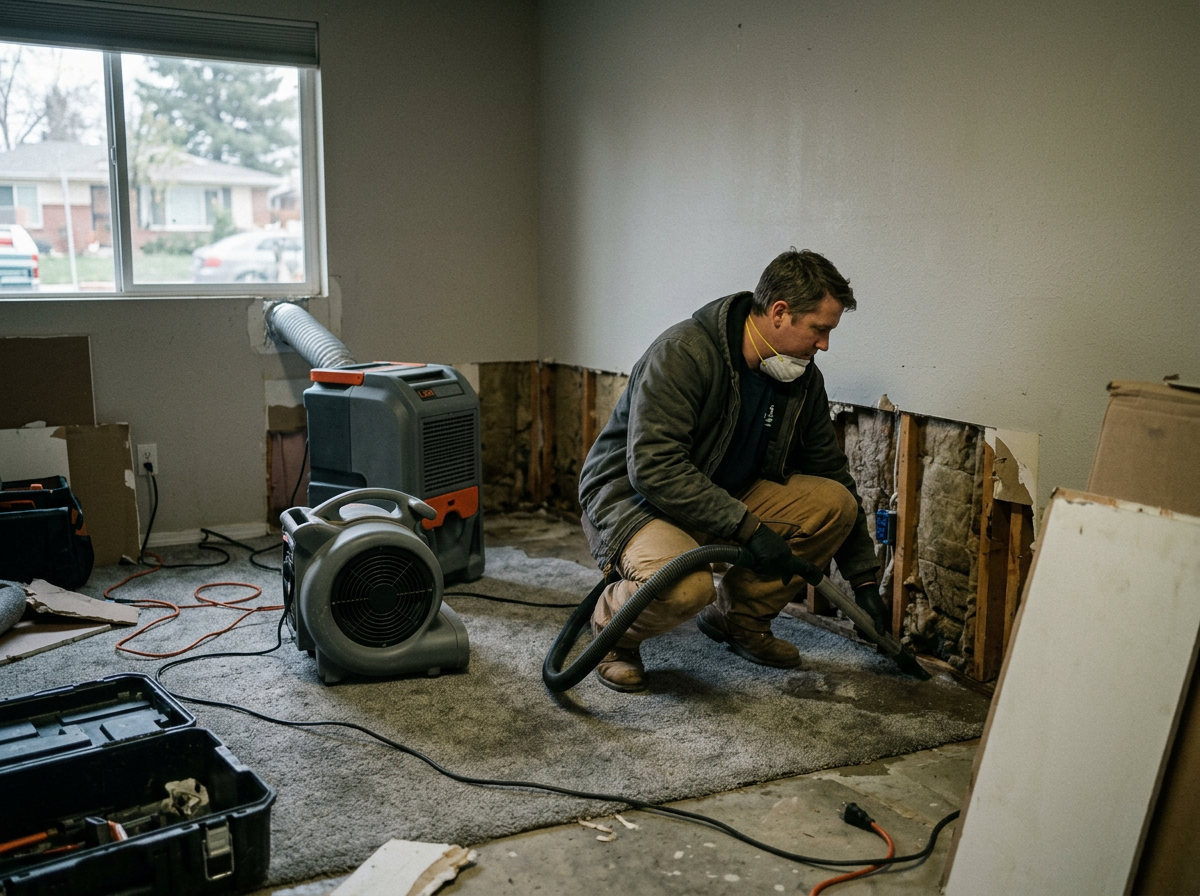
Arvada's housing stock is dominated by 1950s-1970s ranches built on block foundations, many with mature trees whose roots have invaded aging sewer laterals. When heavy rain or a main break sends water under slabs, crews must account for limited access points, tight crawl spaces, and the risk of disturbing established landscaping during extraction. Drive time from Denver bases often stretches 25 to 40 minutes depending on Wadsworth or I-70 traffic, so equipment staging and crew dispatch happen around the clock.
Water extraction work here focuses on pulling moisture from under older concrete before it migrates to adjacent footings or finished basements. Crews frequently encounter clay-heavy soils that hold water longer than newer east-metro subdivisions, plus occasional creek proximity along Ralston and Clear Creek corridors that raises groundwater tables after snowmelt. Quotes are given on site after a walk-through so homeowners see exactly which rooms and wall cavities require drying.
Around Arvada
We regularly work near:
- 📍Olde Town Arvada
- 📍Ralston Creek Trail
- 📍Standley Lake Regional Park
- 📍Arvada Center for the Arts and Humanities
- 📍McIlvoy Park
Water Extraction in Arvada — Local Notes
- •Block foundations common in Arvada's 1950s-70s stock allow seepage along mortar joints that extraction must address before mold sets in.
- •Mature street trees on lots near Olde Town frequently send roots into clay sewer lines, creating recurring backup points after extraction.
- •Narrow driveways and established yards limit equipment placement, often requiring smaller portable units rather than trailer-mounted systems.
- •24-hour availability matters because Arvada sits 20-35 minutes from Denver yards, making same-day response dependent on pre-staged crews.