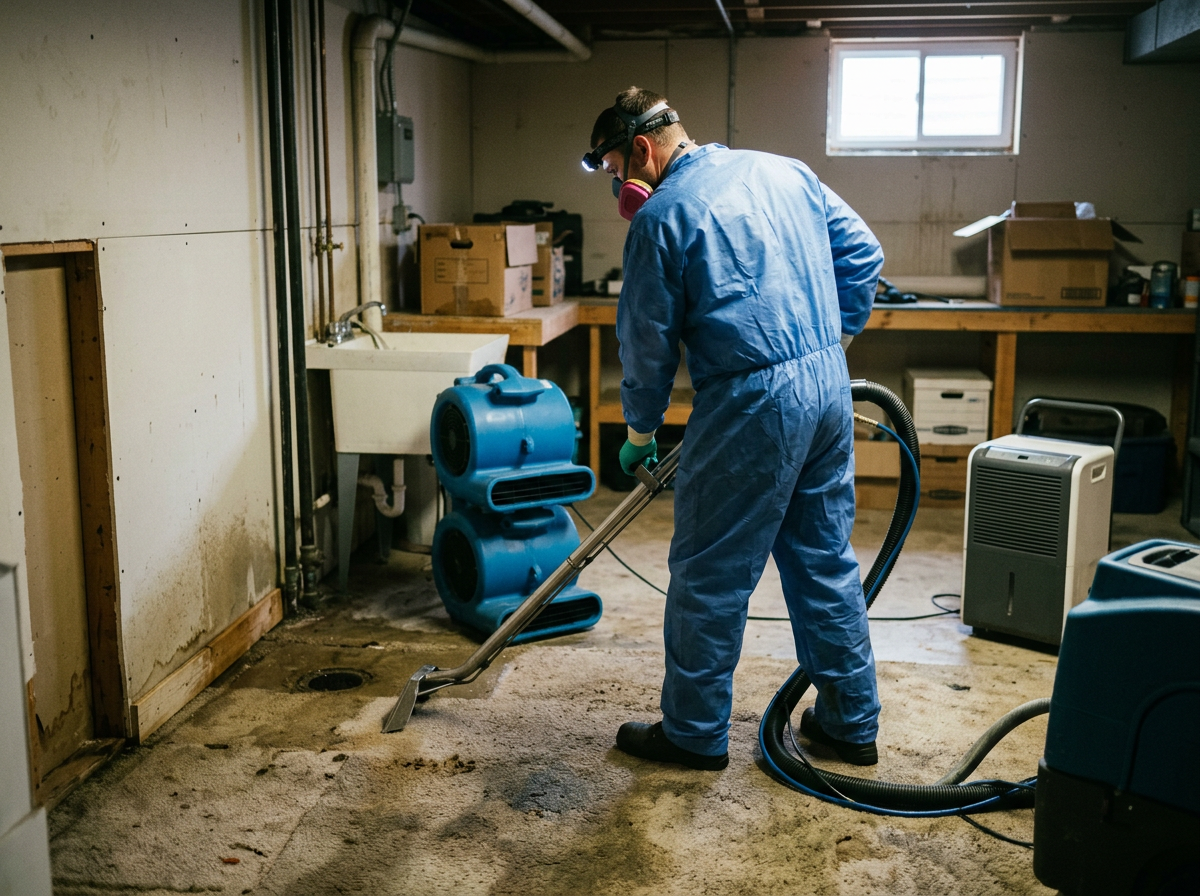
Sewage backups fall under Category 3 water, grossly contaminated with pathogens and requiring full PPE, containment, and disposal of all porous materials that cannot be thoroughly disinfected. In Denver’s semi-arid climate at 5,280 feet, low humidity can make surfaces feel dry within hours while subfloors, wall cavities, and crawl spaces remain wet, creating hidden mould growth within 48 hours if moisture is not measured and removed. Extraction begins with submersible pumps and wet vacuums to remove standing water, followed by removal of affected baseboards, carpet, and insulation before any drying equipment is placed.
Technicians use pin and pinless moisture meters plus thermal imaging to locate hidden water in pre-war brick bungalows without drain tile in Capitol Hill and Baker, as well as in 1950s ranches in Wheat Ridge and Englewood where expansive bentonite clay can push additional water through foundations during spring melt. Drying targets are typically 10–12 percent moisture content in wood framing and under 1 percent in concrete slabs, achieved with commercial air movers and dehumidifiers rather than household fans. Materials that can be salvaged include hardwoods that are dried within 48 hours and non-porous items cleaned with EPA-registered disinfectants; drywall, carpet padding, and particleboard must be cut out and discarded.
Safety protocols include negative air pressure, HEPA filtration, and proper disposal of biohazard waste to protect occupants and technicians. Documentation for insurance claims requires daily moisture logs, photos of all affected areas before and after removal, and a written scope that notes the source of the backup and the water category. Homeowners in areas with older plumbing such as Washington Park and Highlands often need crawl-space or basement work where frozen pipe bursts or swamp-cooler leaks introduce sewage into finished spaces.
Spring runoff on still-frozen ground and autumn swamp-cooler shutdowns are common triggers for backups in Denver, making prompt extraction critical to prevent structural movement from clay soils and long-term odour issues in wall cavities.
Technician insight
In Denver, the thing that catches most people out with Sewage Backup Cleanup is how bentonite clay around older foundations in Capitol Hill and Baker keeps pushing water back in after the initial pump-out, especially when spring melt hits still-frozen ground and homeowners think the job is finished once the floor looks dry.
Capitol Hill Bungalow Backup
A pre-war brick home in Capitol Hill experienced a sewage backup after a supply line failure on a roof swamp cooler. Moisture meters revealed water had wicked into subfloor and wall cavities despite dry-looking surfaces. Technicians removed contaminated drywall and insulation, extracted remaining liquid, and ran drying equipment until readings met target levels. The homeowner received full documentation for the insurance claim and the space passed clearance testing.
Sewage Backup Cleanup Services We Offer
✓Category 3 Water Extraction
Removes standing sewage from basements and crawl spaces using commercial pumps and containment to limit cross-contamination in Denver homes.
✓Contaminated Drywall and Insulation Removal
Cuts out and disposes of affected wall materials in older brick bungalows and ranches where hidden moisture leads to mould.
✓Sewage Odor Neutralization
Applies hydroxyl generators and air scrubbers to eliminate persistent odours trapped in cavities common in pre-war Capitol Hill properties.
✓Crawl Space Sewage Cleanup
Extracts contaminated water and dries soil in unheated crawl spaces where frozen pipe bursts often show damage only on thaw.
✓Foundation Drainage Assessment
Evaluates how expansive bentonite clay and missing drain tile allow sewage to re-enter basements in neighborhoods like Baker and Highlands.
✓Biohazard Flooring Removal
Removes and disposes of carpet, padding, and laminate in areas where spring melt or swamp-cooler failures introduce Category 3 water.
Sewage Backup Cleanup Cost in Denver, CO
| Service | Typical Range | What Affects It |
|---|---|---|
| Initial Assessment And Extraction | $900–$2,800 | Higher when crawl spaces or multiple stories are involved |
| Drywall And Insulation Removal | $1,200–$3,500 | Varies with linear feet of wall and disposal fees |
| Full Drying Package | $600–$1,800 | Equipment runtime and number of air movers required |
| Odor Neutralization | $400–$900 | Depends on size of affected cavities and equipment days |
Ranges are typical for Denver, CO and confirmed with an exact written quote before any work starts.
How it works
- 1
Emergency Site Assessment
Technician arrives within hours, identifies water category, maps moisture, and sets containment to protect unaffected areas.
- 2
Standing Water Extraction
Submersible pumps and truck-mounted vacuums remove liquid sewage while negative air machines control airborne contaminants.
- 3
Material Removal And Disposal
Porous materials are cut out, bagged, and hauled away; hard surfaces are cleaned with hospital-grade disinfectants.
- 4
Moisture Mapping And Drying
Meters guide placement of air movers and dehumidifiers until wood and concrete reach documented dry standards.
- 5
Final Documentation And Clearance
Daily logs, photos, and moisture readings are compiled for insurance and a post-job walkthrough confirms the space is dry.
Pricing
Costs depend on the volume of water, square footage affected, and whether crawl spaces or multiple rooms require work.