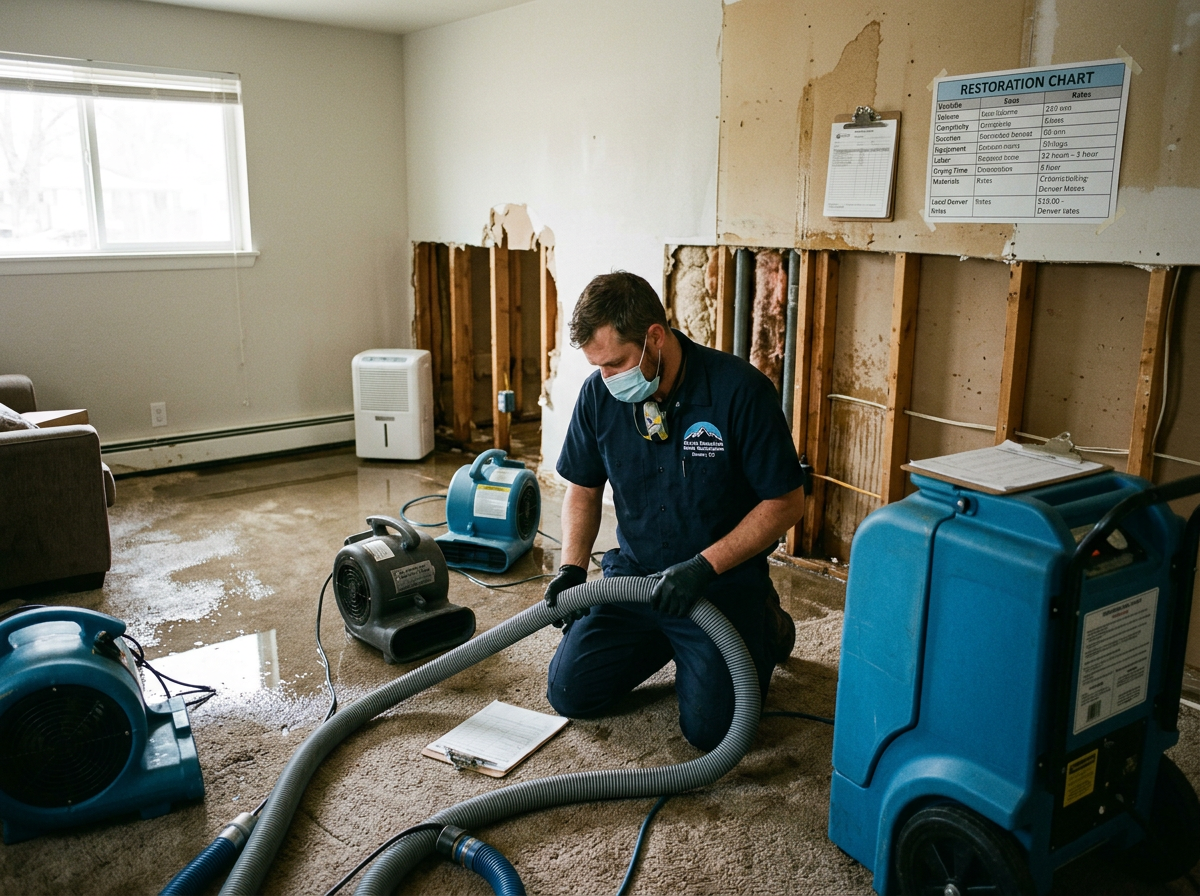
Lone Tree sits on expansive clay soils where newer poured-wall foundations crack at cold joints and tie holes once freeze-thaw cycles begin. Water extraction crews from Denver reach these homes quickly via C-470 and Lincoln Avenue, often arriving before seepage spreads into finished basements. Response time matters here because clay holds moisture against walls longer than sandy soils found farther north.
Most Lone Tree neighborhoods were built after 2000 with slab-on-grade or walk-out basements that lack the older block foundations common in Littleton or Wheat Ridge. Extraction equipment must be positioned on sloped driveways and tight side yards without damaging irrigation lines or mature landscaping that developers installed to control runoff. Technicians familiar with RidgeGate and Park Meadows layouts know exactly where to stage pumps and dehumidifiers.
Heavy spring rains and rapid snowmelt from the nearby bluffs send water toward low-lying lots faster than older sewer laterals can handle. Root intrusion is rare compared with Arvada, but joint failures in the concrete itself create the primary entry points crews see on service calls south of County Line Road.
Around Lone Tree
We regularly work near:
- 📍Park Meadows Mall
- 📍RidgeGate Parkway
- 📍Bluffs Regional Park
- 📍Lone Tree Recreation Center
- 📍Rock Canyon High School
- 📍Sweetwater Park
Water Extraction in Lone Tree — Local Notes
- •Poured-wall construction on expansive clay produces leaks at cold joints and tie holes rather than mortar lines.
- •Steep driveways and side-yard access in RidgeGate and Lone Tree Village require compact extraction equipment.
- •C-470 corridor gives Denver crews direct 20-minute runs to most addresses south of County Line Road.
- •Newer homes lack the mature tree root issues seen in 1950s-70s blocks but face higher hydrostatic pressure after rapid snowmelt.