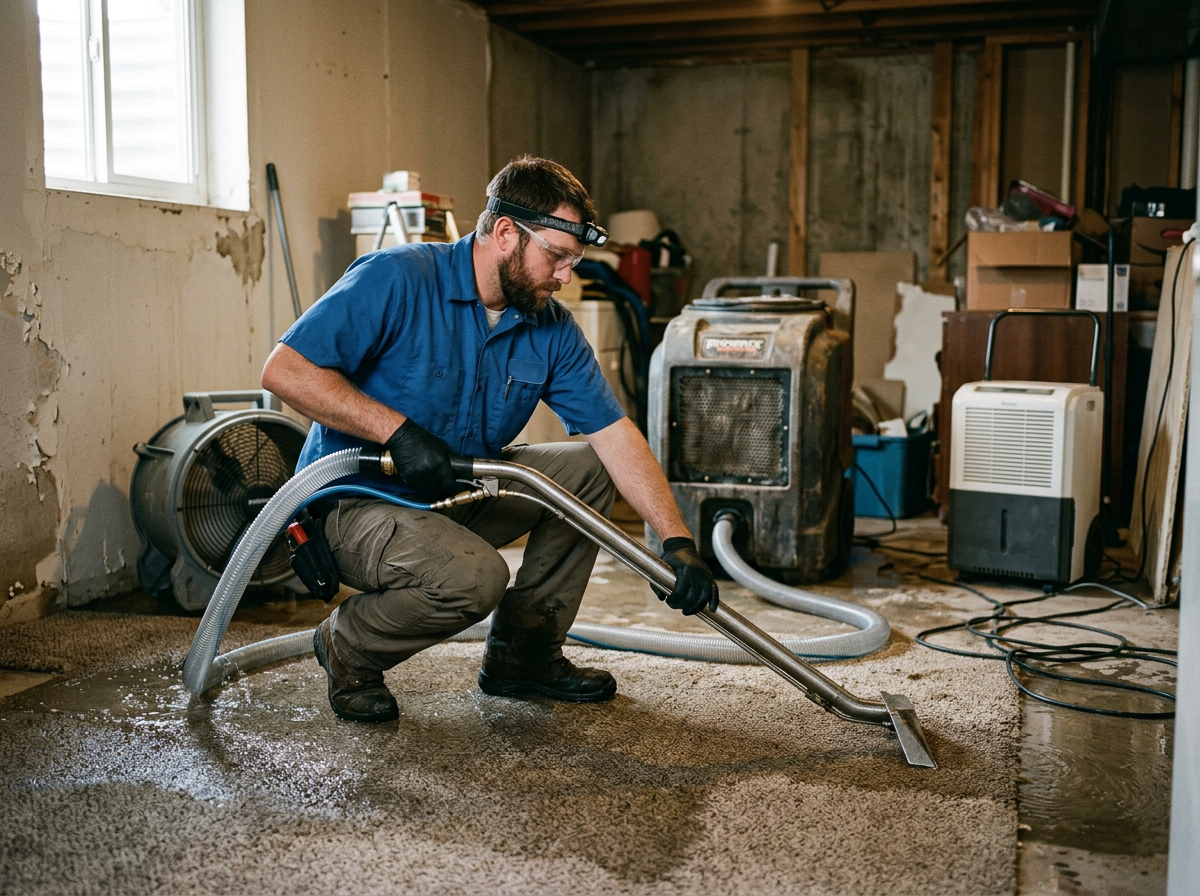
Water entering a Denver home falls into three categories that dictate every step afterward. Category 1 clean water from supply lines can often be extracted and dried in place if caught quickly. Category 2 gray water from washing machines or sump failures requires antimicrobial treatment and more aggressive removal of saturated materials. Category 3 black water from sewage or major street flooding demands full containment, disposal of porous items and often structural demolition. Low annual rainfall and 5,280-foot elevation mean surfaces dry fast while framing and subfloors stay wet, so technicians must classify the water before extraction begins.
Extraction follows a strict sequence using truck-mounted vacuums, portable wands and weighted squeegees to pull standing water first, then lift carpet and pad for separate drying or disposal. After bulk removal, crews open wall cavities, drill weep holes in baseboards and place air movers and dehumidifiers sized for the square footage. Moisture meters and thermal cameras track progress until drywall and framing read within two percent of unaffected areas. In older Capitol Hill and Baker brick bungalows without drain tile, this often means cutting out lower sections of plaster rather than attempting to dry through finished surfaces.
Once visible water is gone, the real work is confirming hidden moisture in bentonite clay soils that swell against foundations and in unheated crawl spaces common in Englewood and Wheat Ridge ranches. Salvageable items include hardwood that has not cupped and insulation that can be fully dried; carpet pad, saturated drywall below the flood line and any material that contacted Category 3 water must be removed. Denver's dry air creates a narrow 24-to-48-hour window before mold colonies form inside wall cavities even when rooms feel dry. Safety protocols include turning off power to affected circuits, using PPE around possible sewage and ventilating to prevent airborne spores.
Insurance documentation requires daily moisture logs, before-and-after photos, equipment placement diagrams and a written scope that notes water category and affected materials. Homeowners should keep copies of every report because claims involving spring melt or frozen-pipe bursts in exterior walls are common and need clear cause-and-origin notes. All work is performed by an owner-operated crew available Mon-Sun 24 hours.
Technician insight
In Denver the thing that catches most people out with Water Extraction is how fast surfaces feel dry while wall cavities and subfloors in pre-war bungalows stay wet; the low humidity and bentonite clay together let mold start inside the structure before anyone notices.
Washington Park Bungalow Spring Melt
Water entered a 1920s stone foundation after March melt ran over still-frozen ground. Meters showed elevated moisture behind plaster even though floors felt dry. Crews extracted standing water, opened lower walls, and ran drying equipment until readings matched unaffected areas, preventing mold in the cavities.
Water Extraction Services We Offer
✓Emergency Flood Extraction
Immediate removal of standing water from living spaces using high-volume truck-mounted equipment sized for Denver's sudden spring runoff events.
✓Crawl Space Water Removal
Pumping and drying of unheated crawl spaces where frozen pipe bursts and poor grading allow water to pool against older stone foundations.
✓Basement Water Extraction
Targeted extraction from below-grade spaces in pre-war homes where expansive clay pushes moisture through mortar joints and sump failures.
✓Swamp Cooler Leak Extraction
Ceiling and attic water removal after float-valve or supply-line failures common at spring startup and autumn shutdown in older Denver roofs.
✓Pipe Burst Water Extraction
Rapid response to thaw damage in exterior walls and garages of 1950s-70s ranches where pipes freeze and release water on warmer days.
✓Subfloor Moisture Extraction
Drilling and vacuum extraction beneath finished floors to reach trapped water that low humidity hides until mold appears weeks later.
Water Extraction Cost in Denver, CO
| Service | Typical Range | What Affects It |
|---|---|---|
| Small-area extraction (under 200 sq ft) | $350–$650 | Increases with Category 3 water or finished hardwood |
| Standard basement or crawl space | $800–$1,600 | Depends on depth of water and need to open walls |
| Whole-home extraction after pipe burst | $1,400–$2,800 | Higher when multiple levels and older plaster are involved |
| Swamp cooler ceiling leak | $450–$900 | Includes attic access and drying of affected drywall |
Ranges are typical for Denver, CO and confirmed with an exact written quote before any work starts.
How it works
- 1
On-Site Assessment
Technicians arrive, classify water category, map affected materials with meters and note structural details unique to the neighborhood's housing age.
- 2
Bulk Water Removal
Standing water is extracted first with vacuums and squeegees, followed by removal of saturated carpet, pad and any standing fixtures.
- 3
Hidden Moisture Access
Walls are opened, weep holes drilled and cavities exposed so drying equipment can reach framing and subfloor hidden by finished surfaces.
- 4
Drying and Monitoring
Air movers and dehumidifiers run while daily meter readings track progress until targets are met and mold risk is eliminated.
- 5
Documentation Handover
Final moisture logs, photos and scope are provided for insurance and homeowner records before equipment is removed.
Pricing
Pricing varies by water volume, access difficulty and whether hidden cavities must be opened; most jobs fall into published ranges.