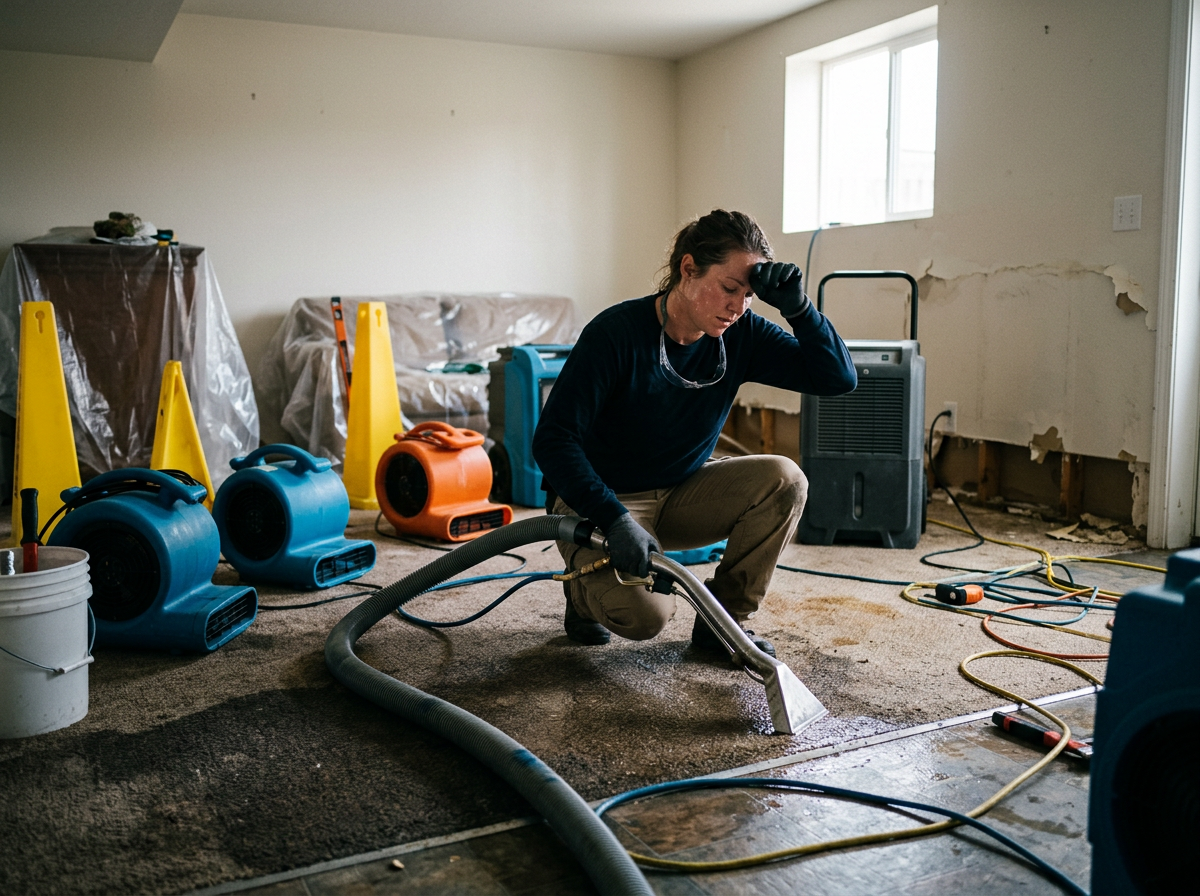
Flood water falls into three categories that dictate every step of the job. Category 1 clean water from supply lines allows faster drying timelines, while Category 2 gray water from washing machines or sump overflows requires antimicrobial steps and Category 3 black water from sewage or river intrusion demands full containment and disposal protocols. In Denver the same volume of water behaves differently at 5,280 feet because low humidity pulls moisture from surfaces quickly while leaving framing and subfloors wet, creating hidden mould risk within 24 to 48 hours if cavities are not opened and metered.
Extraction begins with submersible pumps for standing water followed by truck-mounted extraction wands that pull residual moisture from carpet and pad. Technicians then place air movers and dehumidifiers sized to the square footage and run moisture meters on drywall, base plates, and joists every 24 hours until readings drop below 15 percent. In Capitol Hill and Baker bungalows without drain tile, this often means removing sections of plaster or lath so drying reaches the stone foundation; newer poured walls in Parker or Thornton usually allow less invasive baseboard removal.
Salvage decisions hinge on material and exposure time. Solid hardwood floors can often be dried in place if caught early, but particleboard cabinets, vinyl flooring over wet plywood, and insulation behind wet drywall must be cut out to prevent mould. Denver's 15 inches of annual precipitation and frequent spring melt mean March and April jobs frequently involve groundwater that has wicked upward through expansive clay, pushing against foundation walls and requiring both water removal and temporary shoring until the soil dries.
Safety protocols include turning off electrical circuits in affected zones and using PPE when Category 3 water is present. For insurance claims we photograph every moisture reading, document the water category, and log equipment runtime so adjusters see exactly why certain materials were removed. Homeowners receive a written scope before any demolition begins.
Technician insight
In Denver the thing that catches most people out with Flood Cleanup is how our low humidity makes drywall and carpet feel dry within a day while the bentonite clay under pre-war bungalows in Capitol Hill keeps feeding moisture back into the base plates for another week.
Spring Melt into Washington Park Bungalow
March runoff entered a 1920s stone foundation after snowmelt hit still-frozen ground. Standing water reached six inches in the basement and wicked into plaster walls. Extraction and targeted removal of wet base plaster plus four days of metered drying prevented mould in the cavities; the homeowner received full documentation for the claim.
Flood Cleanup Services We Offer
✓Basement Flood Extraction
Removes standing water and hidden moisture from basements where spring melt runs off frozen ground into older stone foundations common in Washington Park and Highlands.
✓Crawl Space Water Removal
Extracts water from unheated crawl spaces after frozen pipe bursts, then dries joists and subfloor to stop mould growth in low-humidity Denver air.
✓Swamp Cooler Leak Cleanup
Addresses ceiling and attic damage from evaporative cooler float valve failures that occur at spring startup or autumn shutdown in older Denver homes.
✓Post-Melt Structural Drying
Uses metered drying on March and April groundwater intrusion that pushes against bentonite clay and enters basements in Englewood and Arvada ranches.
✓Contaminated Water Extraction
Handles Category 3 water from sewage backups or river-adjacent flooding with full containment and disposal required in low-lying areas of Commerce City and Brighton.
Flood Cleanup Cost in Denver, CO
| Service | Typical Range | What Affects It |
|---|---|---|
| Initial Extraction Visit | $600–$1,800 | Varies with water depth, access, and whether Category 3 containment is required |
| Daily Drying Equipment | $250–$650 | Number of air movers and dehumidifiers plus days needed for older brick homes versus newer poured walls |
| Selective Demolition | $400–$1,200 | Linear feet of drywall or plaster removed when moisture is trapped behind lath or in bentonite-affected foundations |
| Crawl Space or Attic Drying | $800–$2,200 | Extra time and containment needed for swamp cooler leaks or frozen-pipe bursts in unheated spaces |
Ranges are typical for Denver, CO and confirmed with an exact written quote before any work starts.
How it works
- 1
Emergency Assessment
Technician arrives within hours, identifies water category, maps affected areas, and shuts off sources while protecting unaffected rooms.
- 2
Water Extraction
Standing water is pumped out, followed by wand extraction from flooring and base materials to remove as much liquid as possible before drying begins.
- 3
Moisture Mapping and Demolition
Meters locate hidden moisture; wet drywall, insulation, and cabinetry that cannot be salvaged are removed and documented for the insurance file.
- 4
Drying and Monitoring
Industrial air movers and dehumidifiers run until all readings reach target dryness, with daily checks to adjust equipment placement.
- 5
Final Documentation
Complete moisture logs, photos, and a written summary are provided for the claim before equipment is removed.
Pricing
Pricing depends on water category, square footage, and how many hidden cavities require opening; an on-site inspection produces the actual scope and cost.