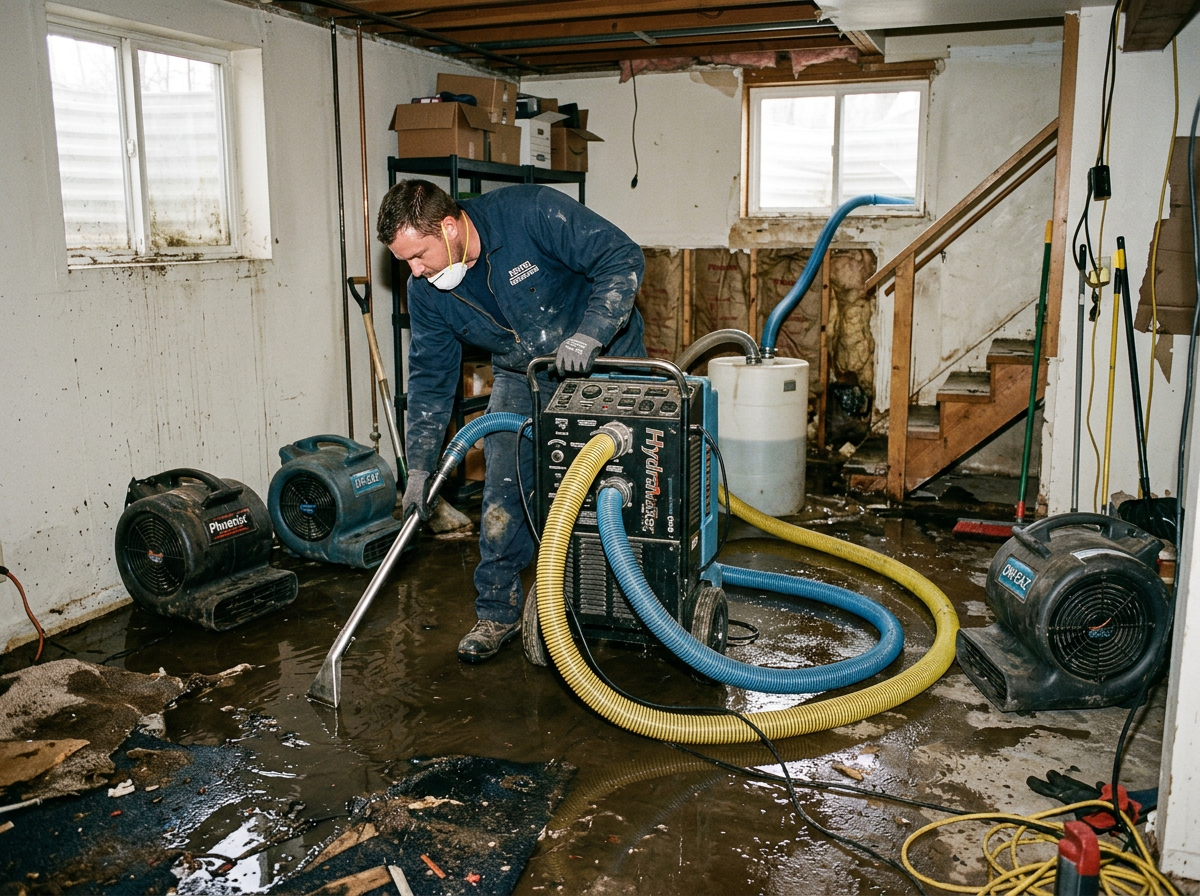
Centennial homes from the 1970s through 1990s often sit on block or early poured foundations with mature trees whose roots reach sewer laterals. When water enters through cold joints or floor drains, extraction crews must navigate narrow side yards and established landscaping that limits equipment placement. Denver-based teams reach most addresses via I-25 or Arapahoe Road, but rush-hour traffic adds thirty to forty minutes, so 24-hour dispatch matters for stopping secondary damage.
Proximity to Cherry Creek and its tributaries means sudden runoff after Front Range storms can push water against south-facing foundations faster than in flatter northern suburbs. Extraction work here frequently includes pulling carpet and pad from finished basements while monitoring sump discharge points that tie into older municipal lines. Local knowledge of which streets flood first helps crews stage equipment before water reaches living areas.
Drive times from central Denver yards average twenty-five minutes outside peak hours, yet construction on I-25 or C-470 can double that. Homeowners along University Boulevard or near deKoevend Park benefit when the crew already knows gate codes and alley access points common in Centennial subdivisions.
Around Centennial
We regularly work near:
- 📍deKoevend Park
- 📍Arapahoe High School
- 📍Cherry Creek State Park
- 📍E Arapahoe Road
- 📍Centennial Center
Water Extraction in Centennial — Local Notes
- •Many Centennial addresses feature 1970s-80s ranches with block foundations and established tree cover that increases root intrusion risk at sewer connections.
- •South and east sections sit closer to Cherry Creek drainage paths, so extraction plans often include checking sump tie-ins before starting pump placement.
- •I-25 and Arapahoe Road corridors create predictable delays; crews stage from Denver with alternate routes via University or Quebec already mapped for Centennial calls.