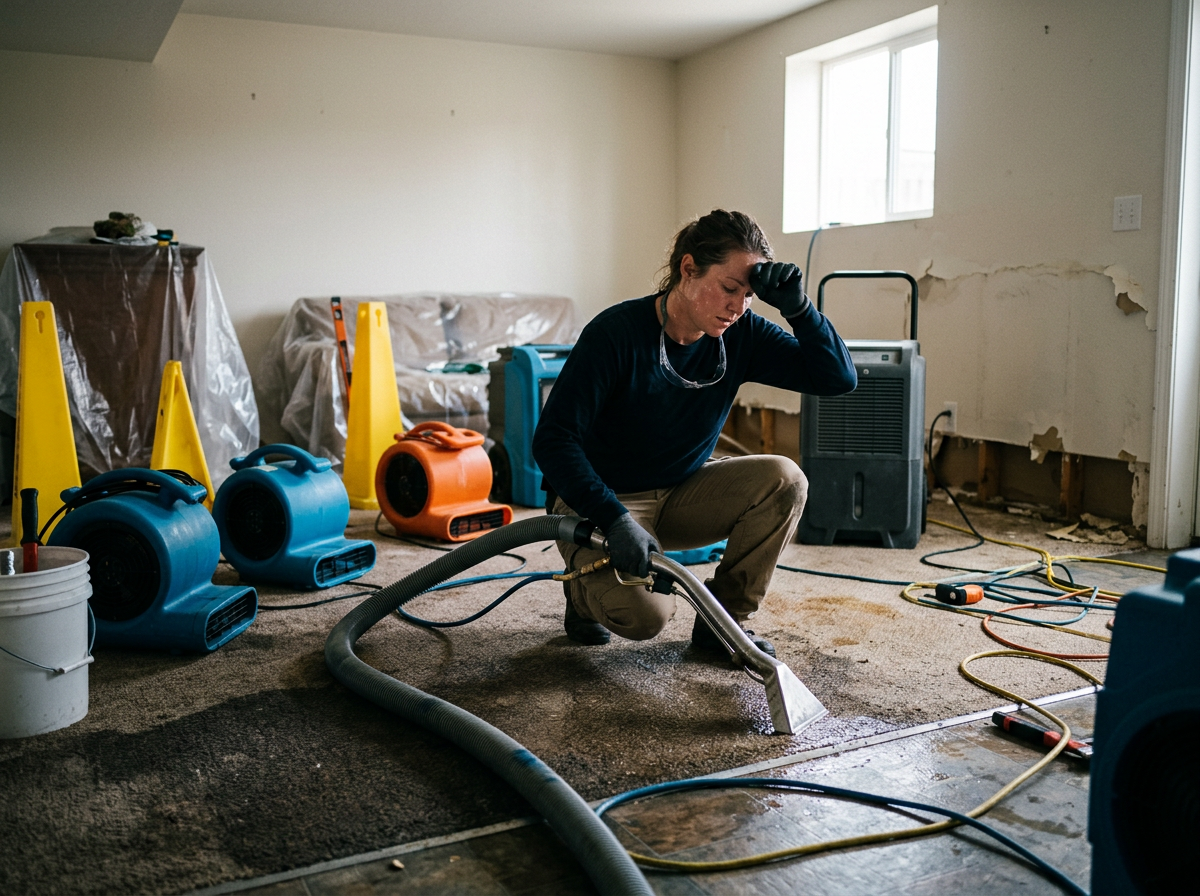
Deer Trail sits fifty miles east of Denver on open plains, so water extraction crews face longer response runs along I-70 and Highway 40. Most homes are older farmhouses or modular units with crawl spaces, septic tanks, and shallow wells rather than city sewers. Heavy rain or hail can flood these low-lying lots quickly, and crews must stage equipment carefully around livestock pens and gravel driveways that turn to mud.
Root intrusion is rare here because trees are sparse, but drainage follows shallow ditches and Kiowa Creek channels that back up during cloudbursts. Extraction teams isolate septic fields first to prevent cross-contamination, then use portable generators because power outages are common after storms. The flat terrain helps with equipment movement once crews arrive, yet the distance from Denver means every job starts with a two-hour drive and a full equipment check before work begins.
Around Deer Trail
We regularly work near:
- 📍Deer Trail School
- 📍US Highway 40
- 📍Deer Trail Cemetery
- 📍Kiowa Creek
- 📍Colorado Highway 79
Water Extraction in Deer Trail — Local Notes
- •Long I-70 drives from Denver require pre-staged equipment and extra fuel planning for rural jobs.
- •Septic systems and wells are standard, so extraction must avoid cross-contamination of household water sources.
- •Open plains exposure brings sudden hail and wind-driven rain that saturates crawl spaces under older farmhouses.
- •Gravel roads and driveways soften after storms, limiting truck access and requiring smaller portable units on site.