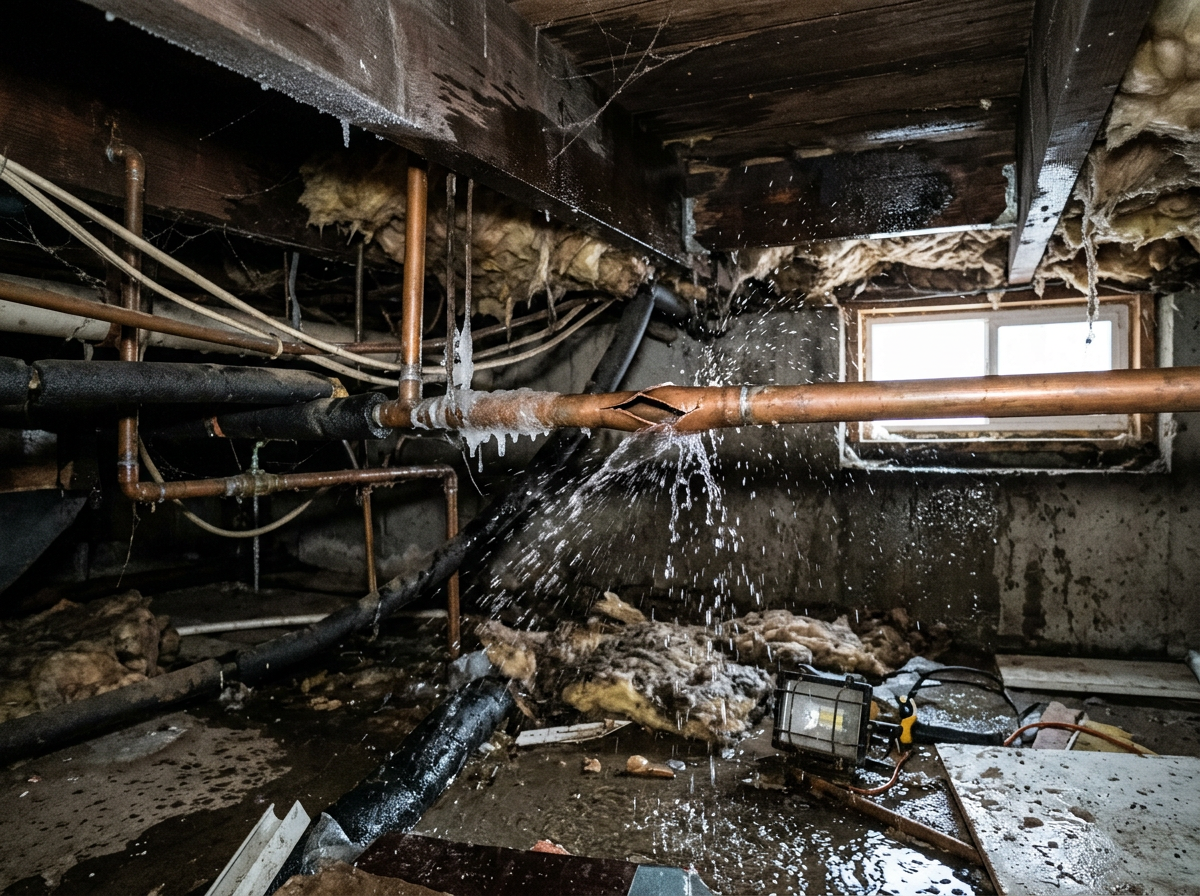
Evergreen sits at higher elevation than the metro core, so winter temperatures drop faster and stay lower, pushing water lines and well tanks into freeze risk that rarely hits Denver itself. Homes here rely on septic fields rather than city sewers, and many sit on steep lots where equipment must be carried or winched in. Water extraction crews from Denver plan extra travel time along winding roads like Highway 74 and stage smaller portable units that fit narrow driveways.
Mature trees line most properties, and their roots often reach toward septic laterals and foundation drains. When a pipe bursts or snowmelt backs up, extraction must avoid contaminating the septic system while still pulling standing water from crawl spaces and basements. Crews familiar with the area check soil saturation around leach fields first and use moisture meters tuned for the clay-heavy mountain soils before starting drying.
Access from the Denver shop adds 45 to 90 minutes depending on traffic through Morrison and on I-70. That delay means early detection calls matter more here than in flatter suburbs. Homeowners along Bear Creek or near Evergreen Lake often see water intrusion from creek overflow or rapid snowmelt that never reaches the plains.
Around Evergreen
We regularly work near:
- 📍Evergreen Lake
- 📍Bear Creek
- 📍Elk Meadow Park
- 📍Downtown Evergreen
- 📍Bergen Park
Water Extraction in Evergreen — Local Notes
- •Septic tanks and leach fields require careful extraction routing to avoid cross-contamination.
- •Steep driveways and narrow mountain roads limit equipment size and increase setup time.
- •Elevation-driven freeze cycles demand winter-specific pumps and heated drying protocols.
- •Longer drive times from Denver mean priority scheduling for calls after heavy snow or rapid thaw.