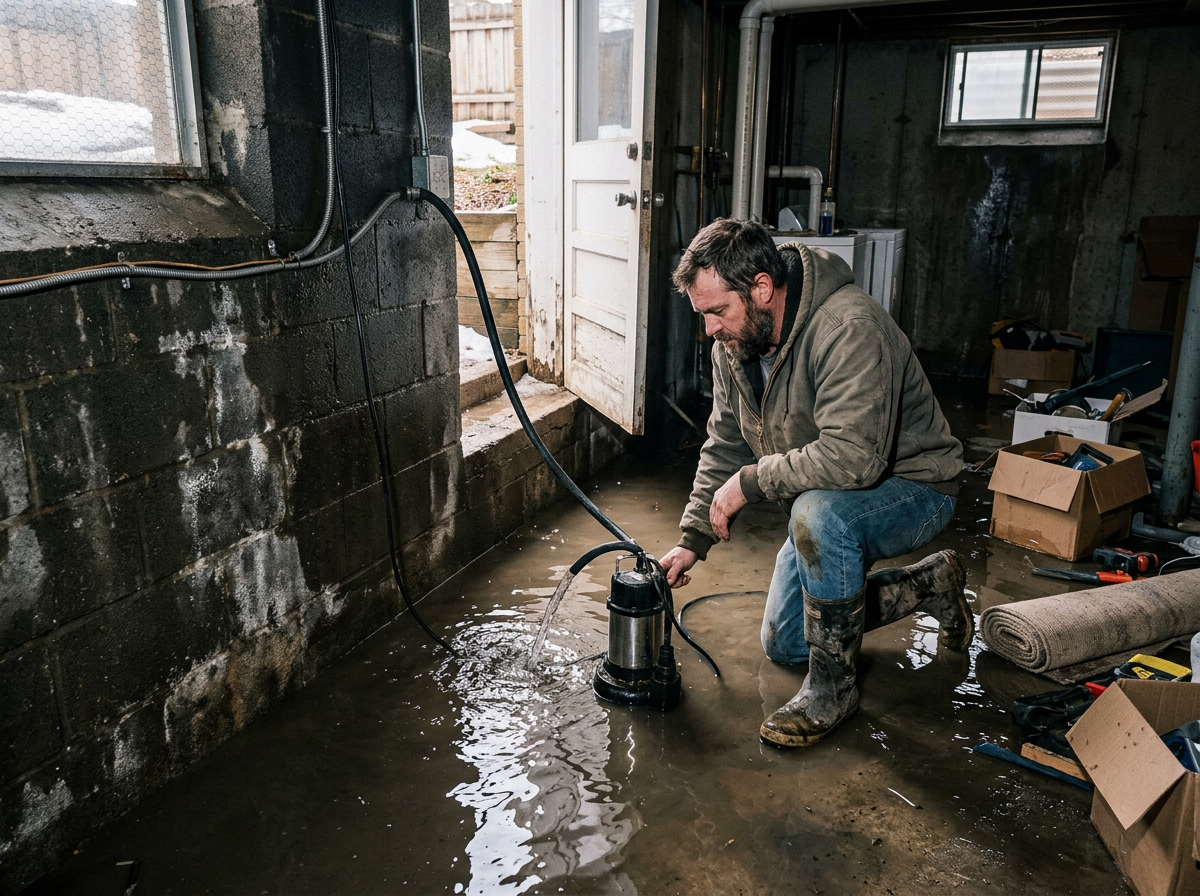
Indian Hills sits in the foothills west of Denver with steep grades, narrow winding roads, and homes built on rocky slopes that drain quickly after storms but trap water against foundations during rapid snowmelt. Most properties rely on private wells and septic tanks rather than city sewer, so extraction crews must locate and protect those systems before pumping begins. Older cabins and mid-century mountain homes often have shallow crawl spaces or slab-on-grade construction that lets water travel under floors fast.
Drive times from central Denver stretch longer because of Highway 74 and Parmalee Gulch Road grades, especially after dark or in winter when ice forms on switchbacks. Equipment must be staged at the base of driveways and carried uphill by hand or small carts. Freeze-thaw cycles crack older galvanized lines and septic lids, turning a small leak into standing water under porches or in utility rooms within hours.
Restoration here focuses on pulling water before it reaches septic drain fields or contaminates wells. Crews check for root intrusion near leach lines and use moisture meters on log or frame walls that sit directly on grade. Quick response prevents mold in the tight, poorly ventilated spaces common in these older foothill homes.
Around Indian Hills
We regularly work near:
- 📍Parmalee Gulch Road
- 📍Mount Falcon Park
- 📍Indian Hills Community Center
- 📍Tiny Town Road
- 📍Indian Hills Fire Station
- 📍Parmalee Elementary School
Water Extraction in Indian Hills — Local Notes
- •Steep, narrow driveways require portable pumps and manual carry of equipment rather than truck-mounted units.
- •Private septic tanks and leach fields sit close to many foundations and must be isolated before extraction to avoid cross-contamination.
- •Freeze exposure on above-grade pipes and shallow well lines creates hidden leaks that surface only after interior water is removed.
- •Longer response windows from Denver mean on-site crews often stage drying equipment the same day to offset drive-time delays.