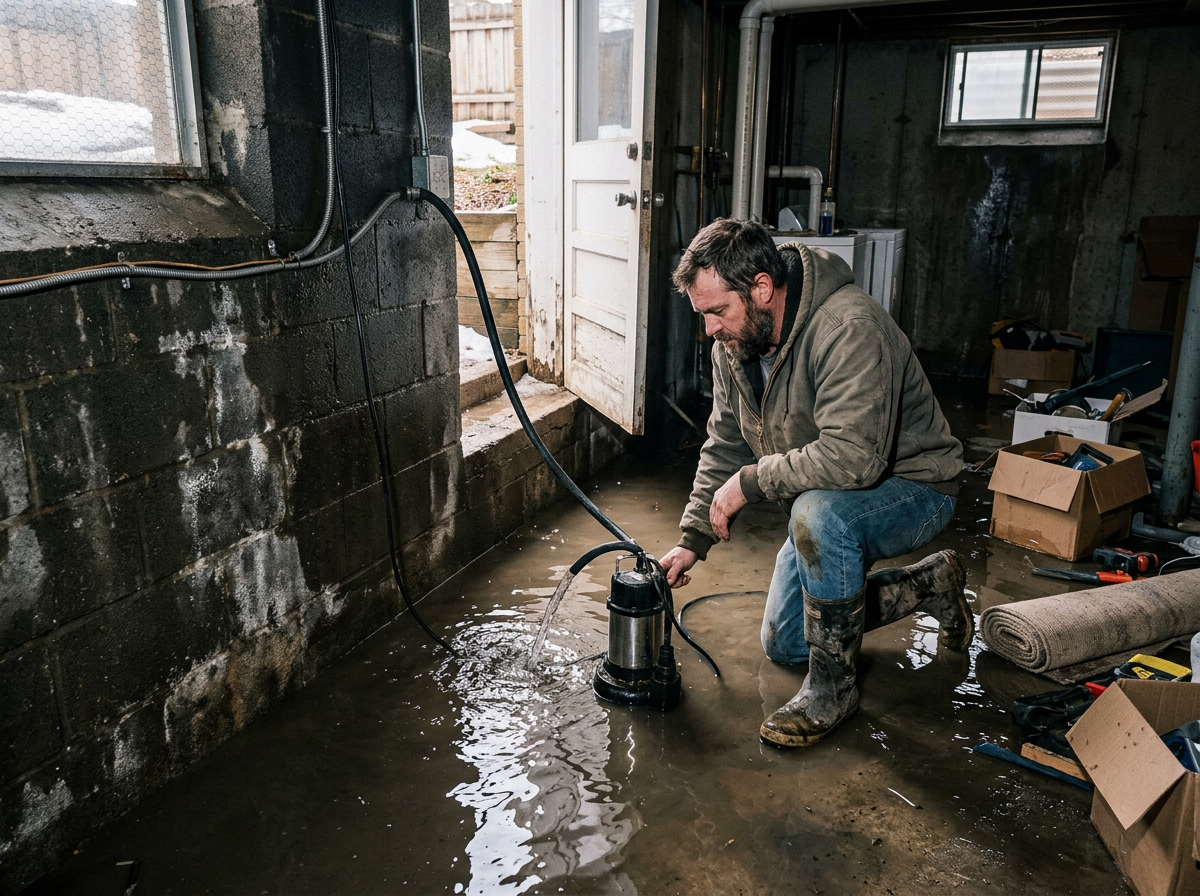
Ken Caryl homes built mostly in the 1970s and 1980s sit on hilly terrain with mature trees whose roots push into aging sewer laterals and block foundations. When heavy rain or snowmelt hits the foothills, water funnels down sloped driveways and collects against lower-level walls faster than in flat metro neighborhoods. Extraction crews coming from Denver must account for longer response times along C-470 and narrow private roads that limit pump truck placement.
Basements here often lack the cold-joint leaks common in newer poured-wall subdivisions, yet they face steady seepage from clay soils and poor lot grading around original ranch layouts. Technicians extract standing water then focus on pulling moisture from carpet pads and subfloors before mold sets in during the dry but windy high-plains afternoons. Access to rear yards is frequently blocked by steep grades or gated entries, requiring extra hose runs and smaller portable units.
Seasonal freeze-thaw cycles around Ken Caryl Ranch expose pipe joints near the surface, turning minor leaks into sudden floods that demand round-the-clock response. Crews familiar with the area stage equipment at the top of driveways and work downward to avoid equipment slippage on icy inclines.
Around Ken Caryl
We regularly work near:
- 📍Ken Caryl Ranch
- 📍Hildebrand Ranch Park
- 📍Chatfield State Park
- 📍Dakota Ridge High School
- 📍Ken Caryl Avenue
Water Extraction in Ken Caryl — Local Notes
- •Mature cottonwood and pine roots along original 1970s lots frequently invade clay sewer lines, requiring camera inspection before full extraction begins.
- •Steep private driveways common in the ranch sections limit large truck access, so crews rely on portable extractors and longer discharge hoses.
- •Foothills runoff channels water directly toward lower-level walkouts after snowmelt or summer storms, unlike flatter streets in nearby Littleton.