Watkins sits east of Denver along the I-70 corridor with mostly post-1990 homes on larger rural lots and flat open land. Water damage calls here often trace to roof leaks after hail, poor lot grading that lets runoff pool against foundations, or occasional sewer backups where lines cross the highway right-of-way. Crews coming from Denver face a straight 25-minute run on I-70 but must watch for sudden plains winds that can complicate tarping and drying.
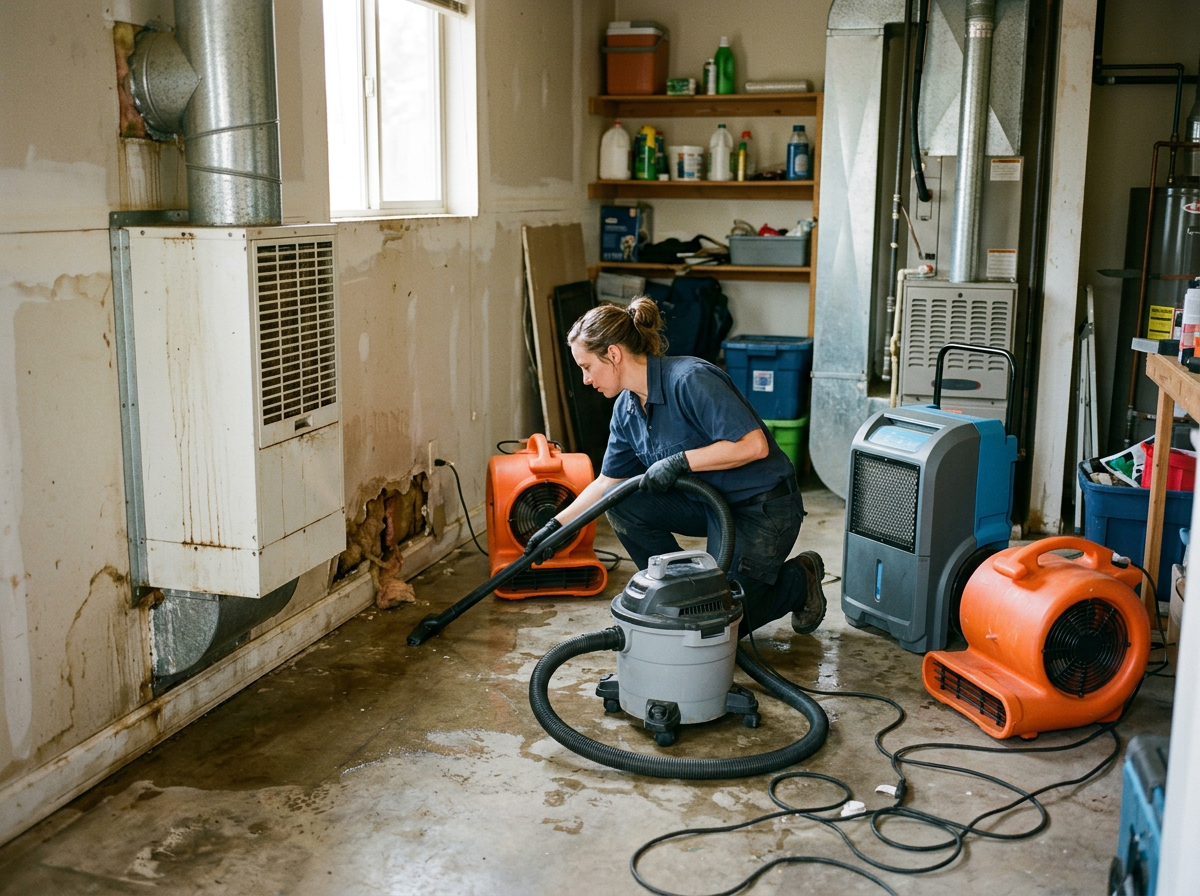
Because many properties rely on private wells and septic systems rather than city sewers, extraction teams check for cross-contamination risks before starting pumps. Flat terrain means water spreads wide instead of draining away, so subfloor drying and dehumidifier placement take extra time. Twenty-four-hour dispatch keeps response quick even on weekend or overnight calls.
Access to some homes requires navigating long gravel drives or crossing cattle guards, so equipment trailers stay staged at the highway shoulder until the on-site assessment is complete. Local notes like these shape every step from arrival to final moisture readings.
Around Watkins
We regularly work near:
- 📍Front Range Airport
- 📍I-70
- 📍Watkins Road
- 📍E-470
Water Extraction in Watkins — Local Notes
- •Rural lots with gravel drives and cattle guards slow equipment staging and require extra time to reach the structure.
- •Flat open terrain lets water sheet across yards instead of running off, increasing the chance of widespread subfloor saturation.
- •Proximity to Front Range Airport and I-70 brings faster Denver response but also wind gusts that affect tarping and drying setups.
- •Many homes use septic systems, so extraction crews test for cross-contamination before discharging any water.