2026-09-02 · Jordan Hale
Frozen Pipe Bursts at 5,280 Feet: What Actually Fails and When
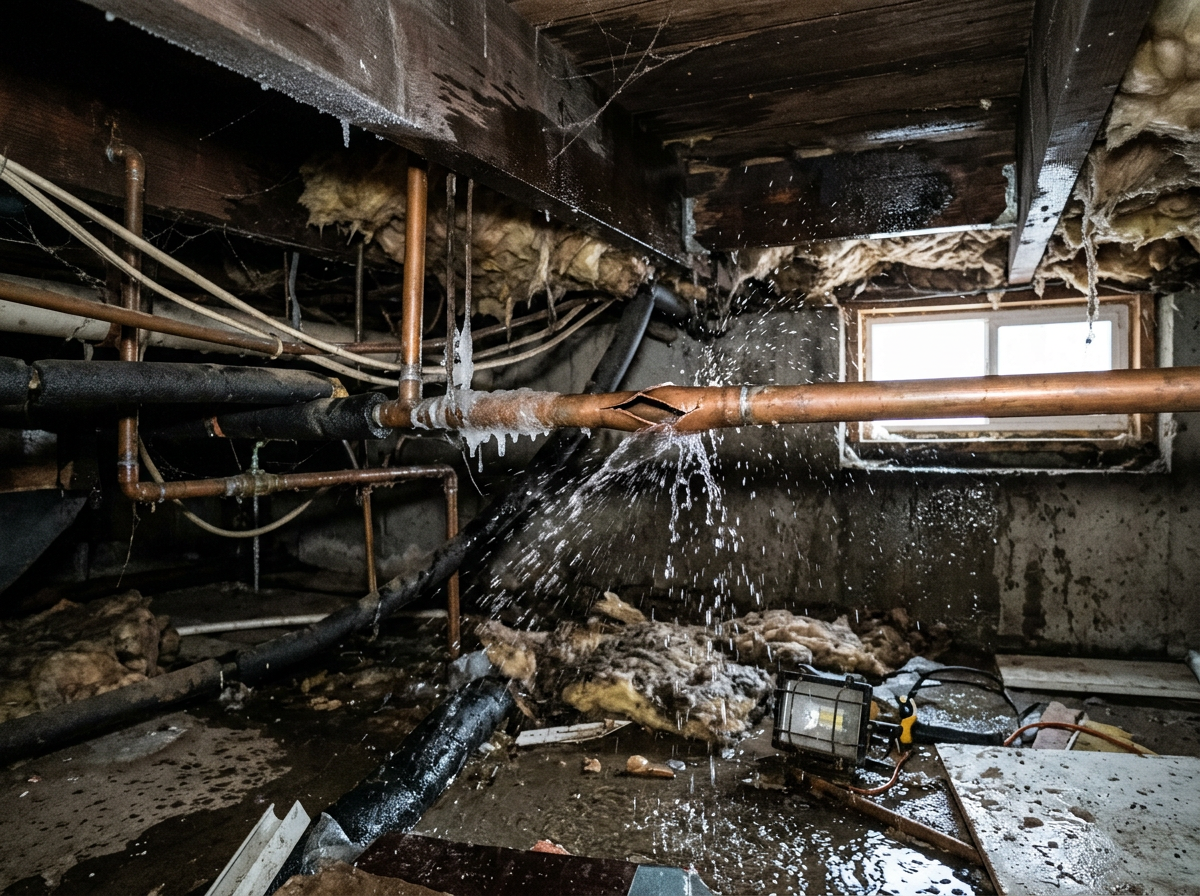
Frozen pipes at 5,280 feet in Denver most often fail after three or more nights with lows below 20°F when water lines run through uninsulated exterior walls, attics, or crawl spaces that drop below freezing while the rest of the house stays warm.
How Elevation and Climate Trigger Freezes
Denver's 5,280-foot elevation and semi-arid conditions with roughly 15 inches of annual precipitation create rapid temperature swings that stress plumbing. Low humidity around 20-30% during winter helps surface moisture evaporate quickly but leaves hidden water trapped in wall cavities and under floors. March and April snowmelt on frozen ground adds hydrostatic pressure against foundations, pushing water toward any small opening created by earlier pipe movement. Expansive bentonite clay beneath many neighborhoods expands when wet and contracts when dry, shifting slabs and stressing rigid copper or PEX runs. These factors combine so that a pipe that survived December may split in late January once daytime highs reach the 40s and ice inside begins to thaw and expand against weakened sections.
Typical Failure Points and Timing
Bursts concentrate in supply lines feeding swamp coolers that run through ceilings, in laundry rooms on north-facing walls, and in garages where water heaters sit against exterior sheathing. Copper lines 8-12 years old with prior minor leaks are common failure points because repeated freeze-thaw cycles work-harden the metal. Homeowners usually discover water between 8 a.m. and noon once indoor temperatures rise and pressure forces water through the split. In many cases the actual rupture happened between 2 a.m. and 6 a.m. when outdoor readings hit their daily low, yet the visible leak waits for the morning thaw. Checking the water meter for unexplained flow after a cold night often confirms the issue before drywall saturation spreads.
Distinguishing Sudden Loss from Groundwater
Colorado insurance carriers treat sudden pipe bursts as covered events while excluding groundwater seepage or sewer backup. A burst from a frozen line qualifies as sudden when water appears abruptly after a documented freeze and shows clean, pressurized flow rather than slow seepage from the soil. Adjusters look for ice damage patterns inside the pipe and rule out long-term moisture stains on framing. When water enters from the exterior during spring melt, coverage often depends on whether the home has proper grading and French drains; homes in areas like Littleton with heavy clay soils see more claim denials tied to groundwater. Documenting the exact time water was first noticed and photographing the pipe before removal helps separate the two categories.
Drying Challenges After a Winter Burst
Low humidity speeds surface drying yet hides moisture in cavities, so affected drywall and subfloors can take 5-8 days to reach safe moisture levels even with professional equipment. Homeowners who open windows in February often pull drier outside air in, but cold temperatures below 35°F reduce evaporation rates and prolong the process. Structural drying focuses on wall cavities behind baseboards and under vinyl flooring where bentonite movement has created small gaps. Without extraction within the first 24-48 hours, secondary mold growth becomes likely once indoor humidity climbs above 50%.
After locating the source, shut off water at the main valve and document visible damage with dated photos before any cleanup begins. Contact a restoration team experienced with Denver's clay soils and insurance distinctions to extract standing water and begin drying. Review the related article What Water Extraction Costs in Denver and What Moves the Price for realistic ranges on similar jobs. For direct service details see burst pipe water damage. Keep one interior door open to the affected room and run a box fan on low to circulate air until professionals arrive.