2026-09-02 · Jordan Hale
What Water Extraction Costs in Denver and What Moves the Price
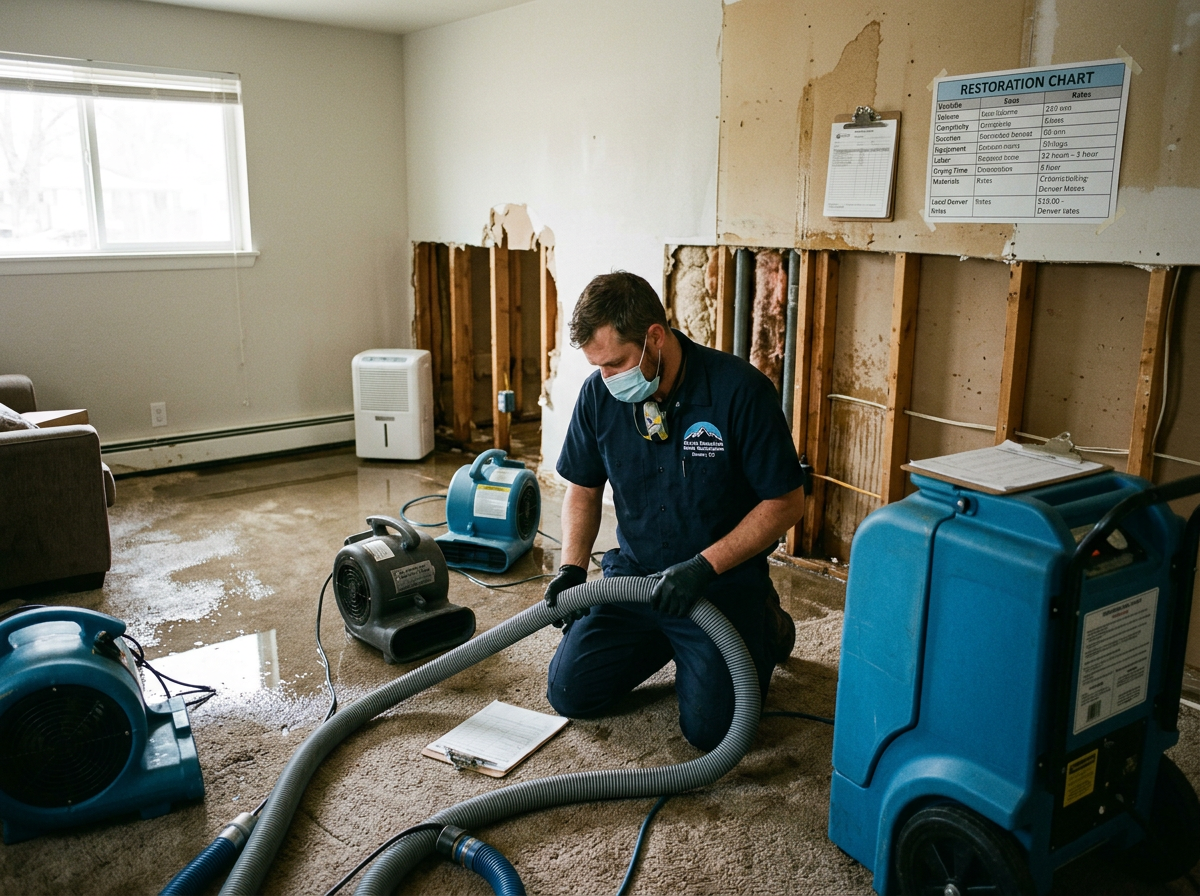
Water extraction in Denver typically costs $800–$3,500 for a standard residential job. The final price depends on square footage affected, water category, and how quickly crews can reach hidden moisture in walls or under floors at 5,280 feet.
Base Cost Ranges for Denver Water Extraction
Homeowners facing a sudden leak or pipe burst usually see invoices between $800 and $1,800 when the affected area stays under 200 square feet and the water remains category 1. Larger events that reach finished basements or require removal of hardwood often climb to $2,200–$3,500. These figures cover truck-mounted extraction, initial moisture mapping, and one round of equipment setup. Jobs that need multiple days of dehumidification or specialty drying under slab-on-grade construction add $400–$900 per extra day. Because Denver receives only about 15 inches of annual precipitation, standing water evaporates quickly once extracted, which can shorten the overall timeline compared with more humid regions.
Climate and Elevation Factors That Shift Pricing
At 5,280 feet the air holds far less moisture, so relative humidity often sits at 20–30 percent during extraction. This speeds surface drying yet allows water to linger in wall cavities or behind baseboards where it is harder to detect. Crews therefore budget extra time for thermal imaging and targeted drying, which raises labor costs by 15–25 percent on many projects. March and April snowmelt on frozen ground frequently pushes water against foundations built on expansive bentonite clay; when that happens extraction must include perimeter drainage checks that add $300–$600. Swamp cooler supply line failures through ceilings create another common scenario where water travels along joists before pooling, requiring ceiling access and extended drying that can push totals toward the higher end of the range.
How Water Source and Category Change the Price
Category 1 clean water from a burst pipe usually stays at the lower end of pricing because Burst Pipe Water Damage crews can often save carpet and pad. Category 2 or 3 water from groundwater or sewage backups demands containment, disposal fees, and sometimes antimicrobial application, adding $600–$1,200. Insurance carriers in Colorado treat groundwater intrusion differently from sudden appliance failures; when water enters through a foundation crack during spring melt it is frequently classified as groundwater and may not be covered, leaving homeowners to pay out of pocket. Frozen Pipe Bursts at 5,280 Feet explains how temperature swings at this elevation cause pipes to split and why those jobs often require same-day extraction to stay within insurance timelines.
Access, Materials, and Equipment Variables
Removing water from finished spaces with hardwood or tile demands more careful demolition and replacement planning than extraction from unfinished basements. Each additional layer of flooring or drywall that must be opened increases both labor and disposal fees. Equipment needs also vary: standard air movers and dehumidifiers suffice for most jobs, yet low-humidity Denver air sometimes requires fewer units running longer, which can reduce daily rental charges but extend the project by one or two days. Water Extraction teams track moisture daily; once readings drop below 12 percent on wood and 50 percent on drywall, equipment is removed and the job is considered complete.
Practical Takeaway
Get two or three on-site assessments that include written moisture maps and itemized pricing before work begins. Focus on crews that document every reading and explain exactly which Denver-specific factors—elevation, clay soil, or seasonal melt—are affecting your quote. This keeps the final cost aligned with the actual scope rather than assumptions.